
Mediatek Dimensity 800U vs 800 & 720 vs Qualcomm Snapdragon 750G Compared – How does the Realme 7 5G performance to Realme V5 & Xiaomi Mi 10T Lite 5G?
Forgive the title gore, but with so many phones and chipsets launched I always like to see how a particular device fits in with its competitors.
Today, Realme announced the Realme 7 5G. Many publications have previously announced this is the international variant of the Realme V5, but there is one significant tweak, the chipset has been switched to the MediaTek Dimensity 800U, making it a sort of love child of the V5 and X7.
The Realme 7 5G promises to be the most affordable 5G phone in Europe, but their competitor, but it was just over a month ago when Xiaomi did similar with the SD750G equipped Mi 10T Lite 5G.
Sadly I have not been able to loan a sample of the Mi 10T Lite 5G, so for this comparison, I am forced to use third-party benchmarks for that phone.


Where is the Realme 7 Pro 5G?
If I am honest, I am a little disappointed that Realme has not launched the international variant of the X7 and X7 Pro.
In a zoom call this week I quizzed Madhav Sheth if they plan to launch the Realme 7 Pro 5G which is what I would have expected to be the international version of the X7. He hinted that Realme is focussing on phones with the 120Hz IPS displays for this year, and new AMOLED phones will be launched early 2021.
He was also conscious of the relentless release cycle and combined with the logistical issues brought on by Covid, the stated that Realme didn’t want to launch four variations of the Relame 7 all within a short period of time.
Specification Comparison
[table id=325 /]
In hindsight, I wish I had asked Madhav why they decided to tweak the V5 and use the Dimensity 800U for the western market.
However, the Mediatek Dimensity 800U and 720 may sound like they will be quite different, but they are not at all.
Everything about the two chipsets is identical with one chance. The Dimensity 800U has its two Arm Coretex A76 cores clocked 20% higher at 2.4Ghz vs 2Ghz.
It is the Dimensity 800 which then switches to a 4×4 design.
Not to be negative to Mediatek, but the Qualcomm Snapdragon 750G on the Xiaomi Mi 10T Lite 5G is a little more exciting, employing two of the newer Arm Coretex A77 cores.
GPU comparison are harder, Qualcomm uses the Adreno 619 on the SD750G. Whereas Mediatek have the same three-core Mali-G57 on the Dimensity 720 and 800U, this then jumps up to four cores on the Dimensity 800.
Currently, only the Oppo Reno4 Z uses the Dimesnity 800, which costs a lot more than the new Realme and Xiaomi phones, but I have included it within this comparison to highlight that there are big differences between that chipset and the 800U.
Benchmark Comparison
Antutu Benchmarks
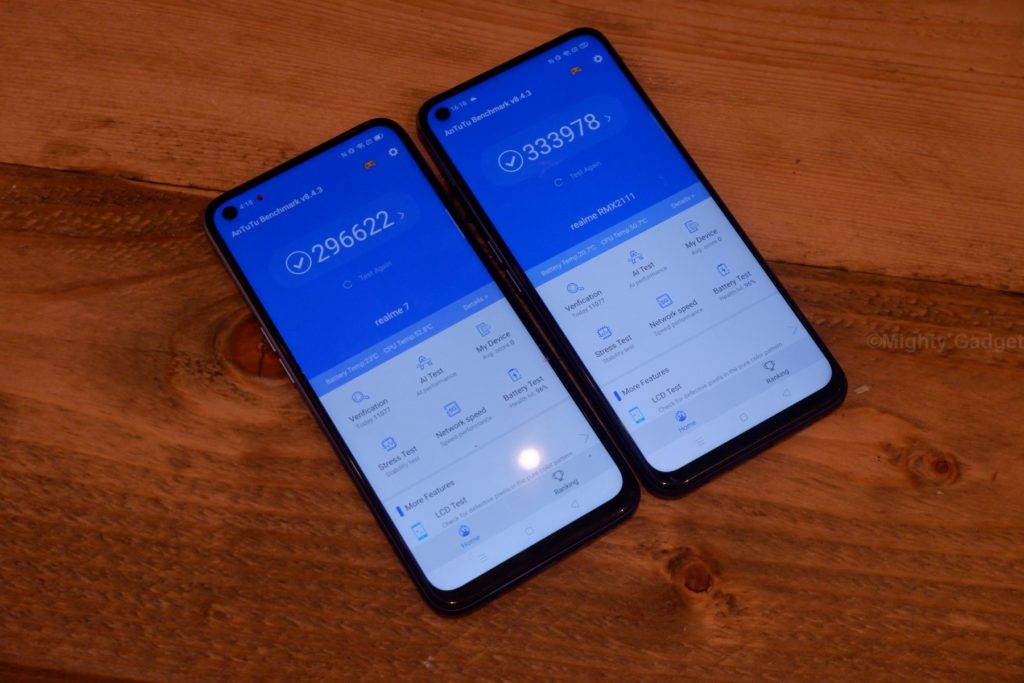
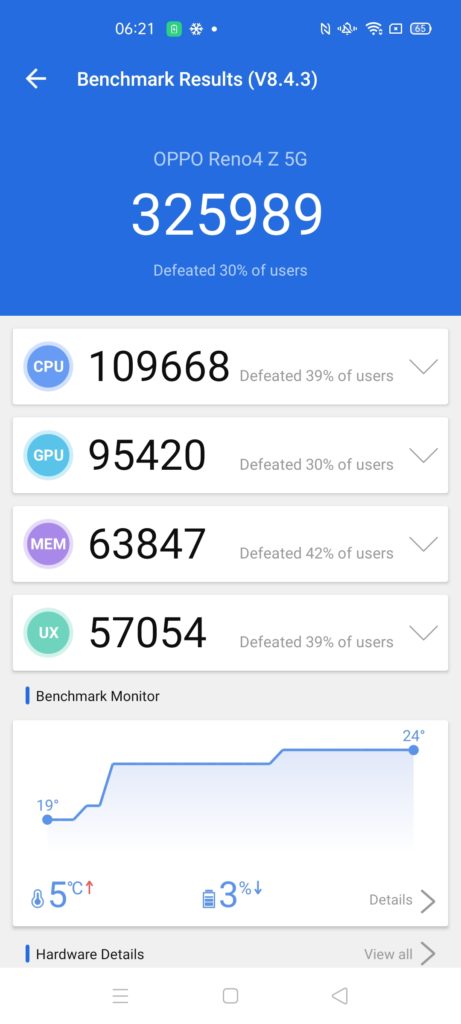
Dimensity 800 in normal mode 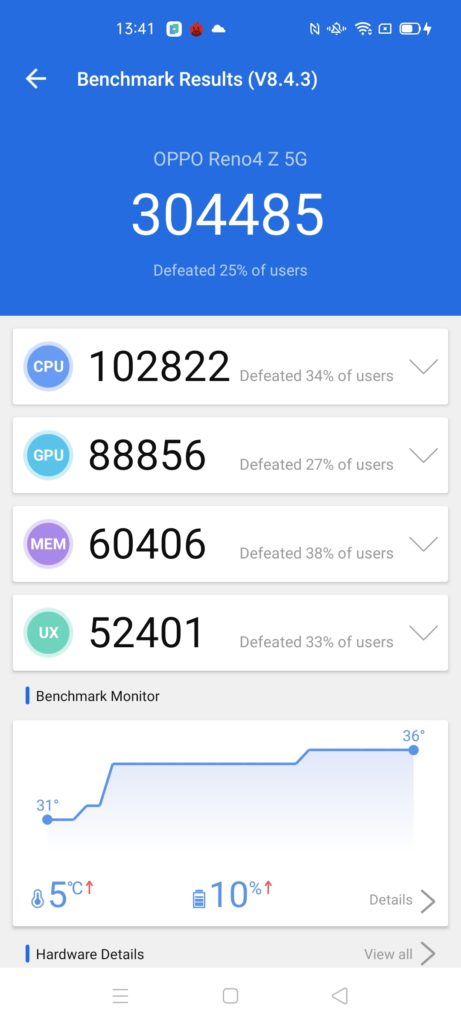
Dimensity 800 in performance mode 
Realme 7 5G with Dimensity 800U in smart mode 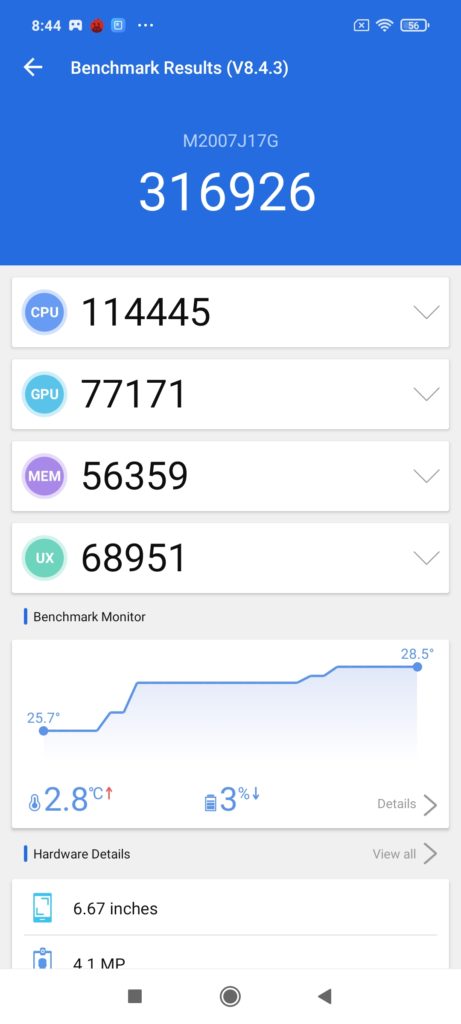
[table id=322 /]
Antutu is the go-to benchmark for generic benchmarking, but in this test, we can see why benchmarking in general, is not always accurate.
The Mediatek Dimensity 800 is a superior chipset to the 800U there is no denying that. But out of the box results show the Realme 7 5G comfortably outperform the Oppo Reno4 Z.
This appears to be the way Realme aggressively clock the chipset using their smart mode battery optimisation, which is the default option. Switching the Oppo to performance mode shows a much closer result, but it is still behind.
However, looking at the breakdown of results, it is the UX score that seems to make a big difference by 14921 points which is a 25% increase. This could be that Realme UI is a little more streamlined than ColorOS, but I don’t think it paints an accurate portrait of real-world performance.
My Xiaomi Mi 10T Lite has now come from Amazon, so I can properly compare, and the results are quite interesting, though not entirely unsurprising.
While the Snapdragon 750G came behind the two Dimensity chipsets, I think it is important to ignore the overall score and look at the breakdown. In particular, the SD75G dominates with the CPU result with a score 10% ahead of the Realme, which is a result of the newer more advanced Arm Coretex A77 cores.
Conversely, the Dimensity 800U on the Realme comfortably outperforms the Snapdragon by 12%
GeekBench Benchmarks
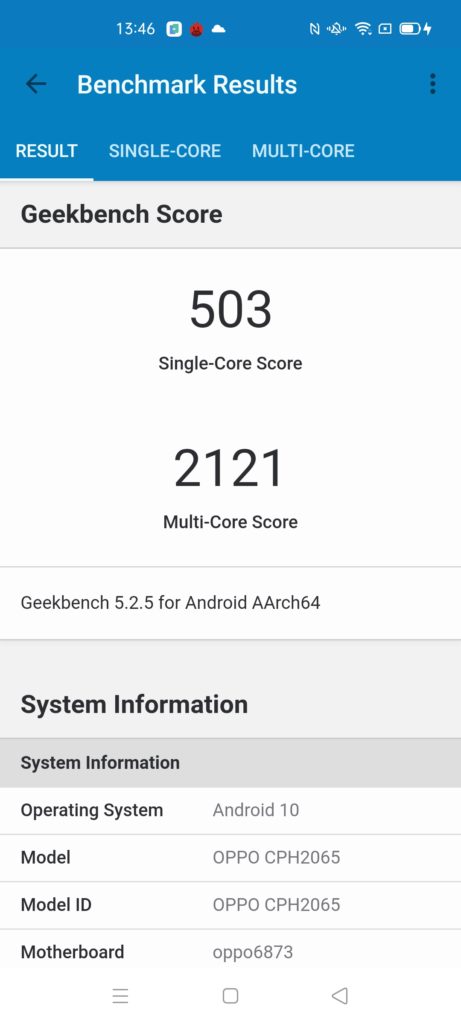
Dimensity 800 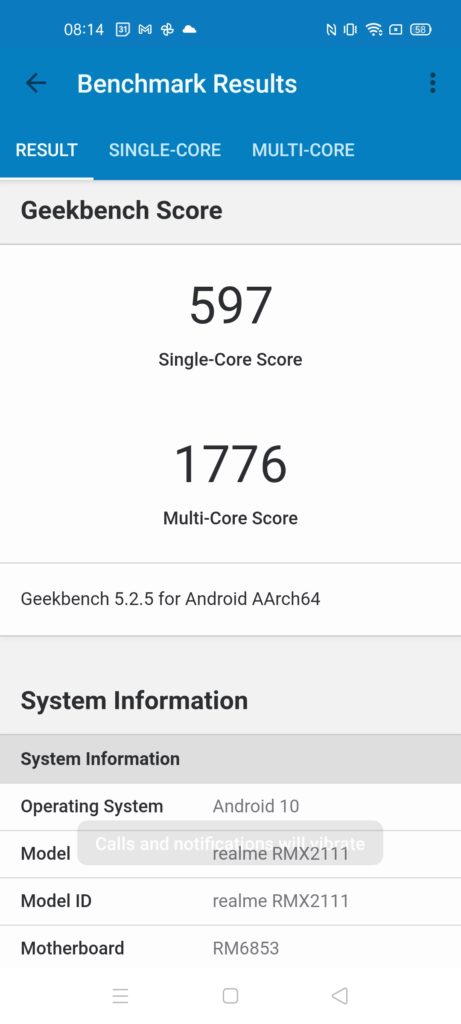
Dimensity 800U 
Helio G95 
[table id=324 /]
The GeekBench results appear more accurate. The Dimensity 800 has four A76 cores so scores a high multi-core result, but the cores are lower clocked than the Dimensity 800u, so the single core is lower. In fact, with a difference of 18.7% it is almost identical to the 20% increase in frequency.
The Xiaomi and its Snapdragon 750G are just showing off here, Single-core performance is ahead by 10%. Multi-core is only slightly behind the OPPO which has the Dimensity 800 with four A76 cores. Looking back at old benchmarks, the SD750G has similar performance to last years flagship Qualcomm Snapdragon 855 and similar single core performance to the Kirin 980 on the Huawei P30 Pro.
3D Mark Benchmarks


3DMark results are also roughly as expected, the Dimensity 800 sits ahead of the 800U thanks to the improved GPU, though not quite as much as expected.
I am unable to find any results for the Dimensity 720 or Snapdragon 750G. At the moment I am struggling to get 3Dmark to download the files to run the benchmarks on the Xiaomi.
Overall
The specs and benchmarks speak for themselves. The Mediatek Dimensity 800U is an amazing chipset because it offers a new low price point. It performs a lot closer to the Mediatek Dimensity 800 than I was expecting, but I suspect this is partly a difference between the way companies optimise the chipset performance on their phones.
Now that I have benchmarked the Snapdragon 750G we can see this is an amazing chipset in its own right. It has the most powerful CPU for any none flagship chipset this year; it even outperforms the SD765G which sites higher up. However, Qualcomm has kept the GPU performance down so they don’t cannibalise their own product lineup.
This leads to an important distinction between the two new affordable 5G chipsets. The Mediatek Dimensity 800U appears to be superior for gaming, while the Qualcomm Snapdragon 750G appears to be superior for general use.