Any links to online stores should be assumed to be affiliates. The company or PR agency provides all or most review samples. They have no control over my content, and I provide my honest opinion.
Airbank Pocket 2 Pro Mini Bike Pump Review
Summary
The Airbank Pocket 2 Pro delivers the same core performance and feature set as the Cycplus AS2 Pro while undercutting it significantly on price, making it one of the strongest value options in the electric mini bike pump category. It is compact enough to carry on every ride, accurate enough for consistent pressure management, and powerful enough for realistic roadside use on both road and mountain bikes. While it does not replace CO2 or a manual pump in every scenario, it strikes an excellent balance between convenience, reliability, and cost, particularly for regular cyclists who want a dependable, reusable backup solution.
Overall
95%-
Overall - 95%95%
Pros
Excellent price-to-performance ratio compared with direct competitors.
Accurate digital pressure display with reliable auto-stop functionality.
Compact, well-built design that is genuinely practical to carry on rides.
Cons
Loud operation may be intrusive in quiet environments.
Generates noticeable heat during consecutive inflations.
Limited battery capacity compared with manual pumps for multiple flats.
I reviewed three models of the Cycplus AS2 back in December 2024. They were my first introduction to electric mini bike pumps, and I loved the convenience of them.
I have ADHD, and I am terribly disorganised at times and frequently forget to pack new CO2 cartridges after using them, so having a backup pump is ideal. Additionally, I prefer not to use CO2 for short casual bike rides as it does not feel very cost-effective, so I now leave one of these electric bike pumps in my backpack.
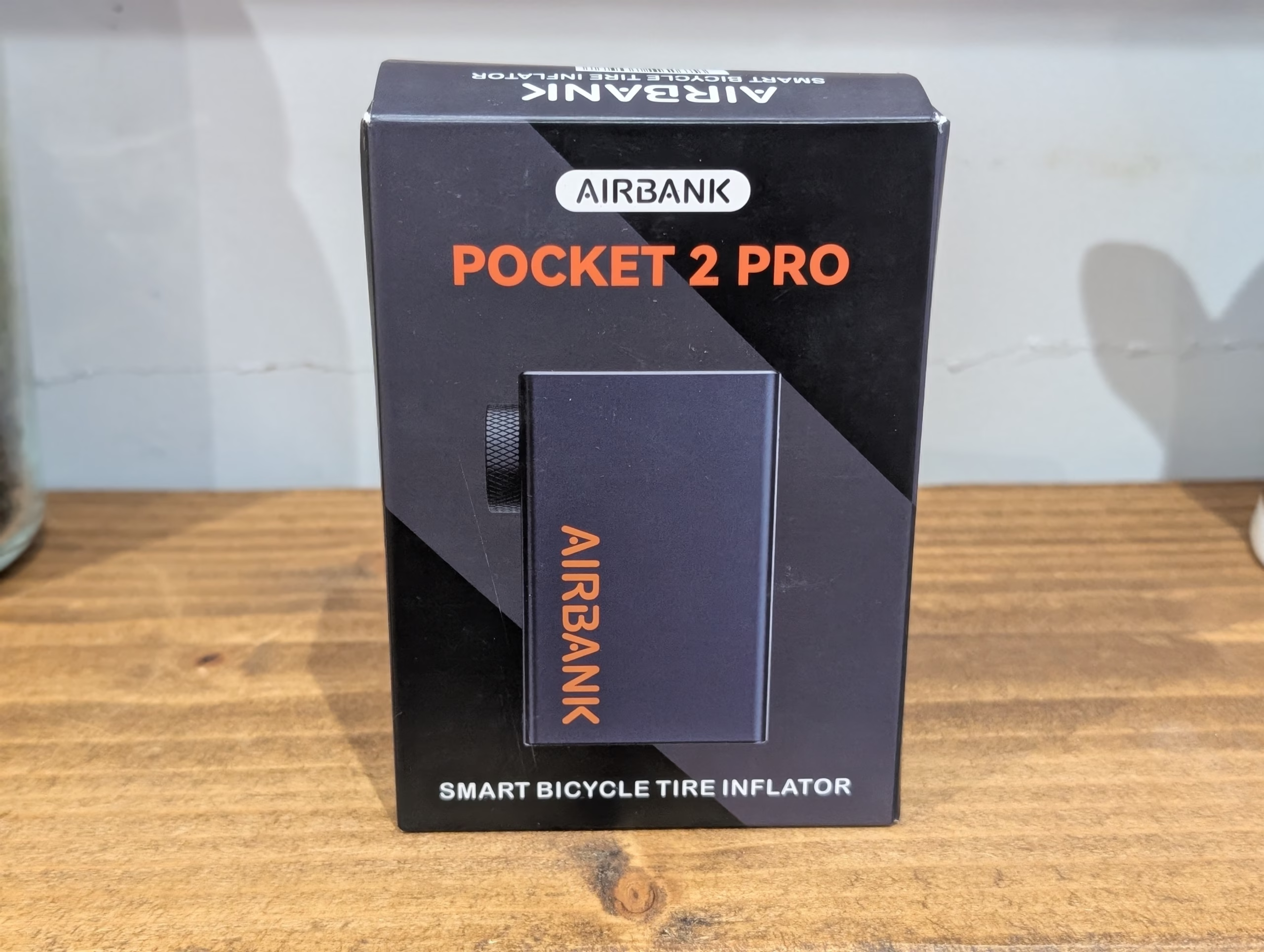
Recently, Airbank sent me their new Pocket 2 Pro to review. This is their flagship bike pump, and it has more or less the same spec as the Cycplus AS2 Pro, but at a lower price point. Having spent several weeks testing this pump across different scenarios – from road cycling to mountain biking – I can offer a detailed assessment of how it performs in real-world conditions.
The electric mini bike pump market has grown considerably over the past couple of years, with several manufacturers now competing for attention. The appeal is obvious: a compact, rechargeable device that can get you back on the road without the physical effort of a manual pump or the single-use nature of CO2 cartridges. The question is whether the Airbank Pocket 2 Pro justifies its price tag and how it stacks up against the established competition from Cycplus.
| Preview | Product | Rating | Price | |
|---|---|---|---|---|

| AIRBANK Mini Bicycle Pump with Pressure Gauge, Pocket 2 PRO... | Buy on Amazon |
Related Reviews
- Cycplus AS2 Electric Bike Pump Review
- CYCPLUS Air Pump A3 Review
- Cycplus L7 Radar Tail Light Review
- Nebo Ultimate Multi Voltage Power Pack Review
Airbank Pocket 2 Pro vs Cycplus AS2 vs AS2 Pro vs AS2 Pro Max
Before diving into the practical testing, it is worth examining the specifications of the Airbank Pocket 2 Pro alongside the Cycplus range. The numbers tell an interesting story about where each pump sits in the market and what trade-offs you might expect.
Specification | Airbank Pocket 2 Pro | Cycplus AS2 | Cycplus AS2 Pro | Cycplus AS2 Pro Max |
|---|---|---|---|---|
Weight | 130g | 97g | 120g | 205g |
Dimensions | 50x29x70mm | 46.5x28x65mm | 43.5x28x70.5mm | 54x32x81mm |
Max Pressure | 120 PSI | 100 PSI | 120 PSI | 120 PSI |
Real-time Pressure | Yes | No | Yes | Yes |
Battery | 420mAh 7.4V | 300mAh 7.4V | 420mAh 11.1V | 600mAh |
Accuracy | 1 PSI | N/A | 1 PSI | 1 PSI |
Inflation Speed | 90s to 110 PSI (700C25) | 2.5min at 100 PSI | 2min at 120 PSI | 75s at 120 PSI |
Endurance | 4×80 PSI | 2×80 PSI | 2×110 PSI | 4×120 PSI |
Extended Hose | Yes | Yes | Yes | Yes |
Charging Time | 30 mins | 20 mins | 30 mins | 1 hour |
Charging Port | Type-C | Type-C | Type-C | Type-C |
Amazon UK Price | £70 | £65 | £89 | £106 |
Looking at the specifications, the Airbank Pocket 2 Pro sits firmly between the Cycplus AS2 Pro and AS2 Pro Max in terms of capability, whilst matching the AS2 Pro on most key metrics. The 130g weight is marginally heavier than the AS2 Pro’s 120g, though both are light enough to be unnoticeable in a jersey pocket or saddle bag.
The 120 PSI maximum pressure matches both AS2 Pro variants, which is sufficient for road cycling where typical pressures range from 80-100 PSI depending on tyre width and rider preference. Mountain bike users running lower pressures of 25-40 PSI will find all these pumps more than adequate. The real-time pressure display is a feature I consider essential – guessing pressure based on feel is not particularly accurate, and the peace of mind from seeing the exact PSI reading is well worth having.
The 420mAh battery capacity matches the AS2 Pro exactly, and the claimed endurance of four inflations to 80 PSI seems realistic based on my testing. The 30-minute charging time via USB-C is practical for modern use, though I would recommend keeping it topped up regularly rather than waiting until it is completely depleted.
What stands out here is the pricing. At £70 on Amazon UK, the Airbank Pocket 2 Pro undercuts the Cycplus AS2 Pro by £19 whilst offering essentially identical specifications. If you purchase directly from the Airbank website, the price drops to around £52 with free worldwide shipping, which represents excellent value.
Working Performance When Fully Charged
The manufacturer provides detailed performance claims for various tyre types and pressures, which I have found to be reasonably accurate in my testing. Understanding these figures helps set realistic expectations for what the pump can achieve.
Tyre Type | Pressure (PSI/Bar) | Inflating Time | Available Times |
|---|---|---|---|
700C25 | 0-80 PSI / 5.52 bar | 50s | 4 |
700C25 | 0-110 PSI / 7.58 bar | 90s | 2 |
700C28 | 0-80 PSI / 5.52 bar | 60s | 3 |
700C32 | 0-80 PSI / 5.52 bar | 80s | 2 |
29×2.2 | 30-50 PSI / 2.07-3.45 bar | 60s | 3 |
29×2.2 | 0-30 PSI / 2.07 bar | 70s | 3 |
700C45 | 30-50 PSI / 2.07-3.45 bar | 30s | 6 |
700C45 | 0-50 PSI / 3.45 bar | 80s | 2 |
For road cyclists running 700x25c tyres, the 50-second inflation time to 80 PSI is genuinely impressive. I timed several inflations during my testing and consistently achieved results within a few seconds of this claim. One YouTube reviewer I watched managed to inflate a 700x23c tyre to 80 PSI in approximately 40 seconds, which aligns with my observations that narrower tyres inflate slightly faster.
The four inflation cycles to 80 PSI on a 700x25c tyre is a realistic figure, and I managed to achieve five inflations before the battery showed signs of depletion during one test session. That said, I would not recommend pushing the battery to its absolute limit regularly – keeping a reserve for emergencies is sensible practice.
For mountain bikers running larger volume tyres like 29×2.2, the inflation times are naturally longer due to the increased air volume required. The 60-second time for 30-50 PSI is acceptable, though inflating from completely flat will take noticeably longer. In my experience testing with mountain bike tyres, the pump handled the task adequately, though I could feel it working harder and generating more heat than with road tyres.
One point worth noting is that these electric pumps are better suited to topping up tyres or dealing with slow punctures rather than inflating from completely flat. If you have a completely deflated tyre, especially a large-volume mountain bike tyre, you will be waiting a while and using significant battery capacity. For these scenarios, CO2 cartridges remain faster, though obviously they are single-use.
Design
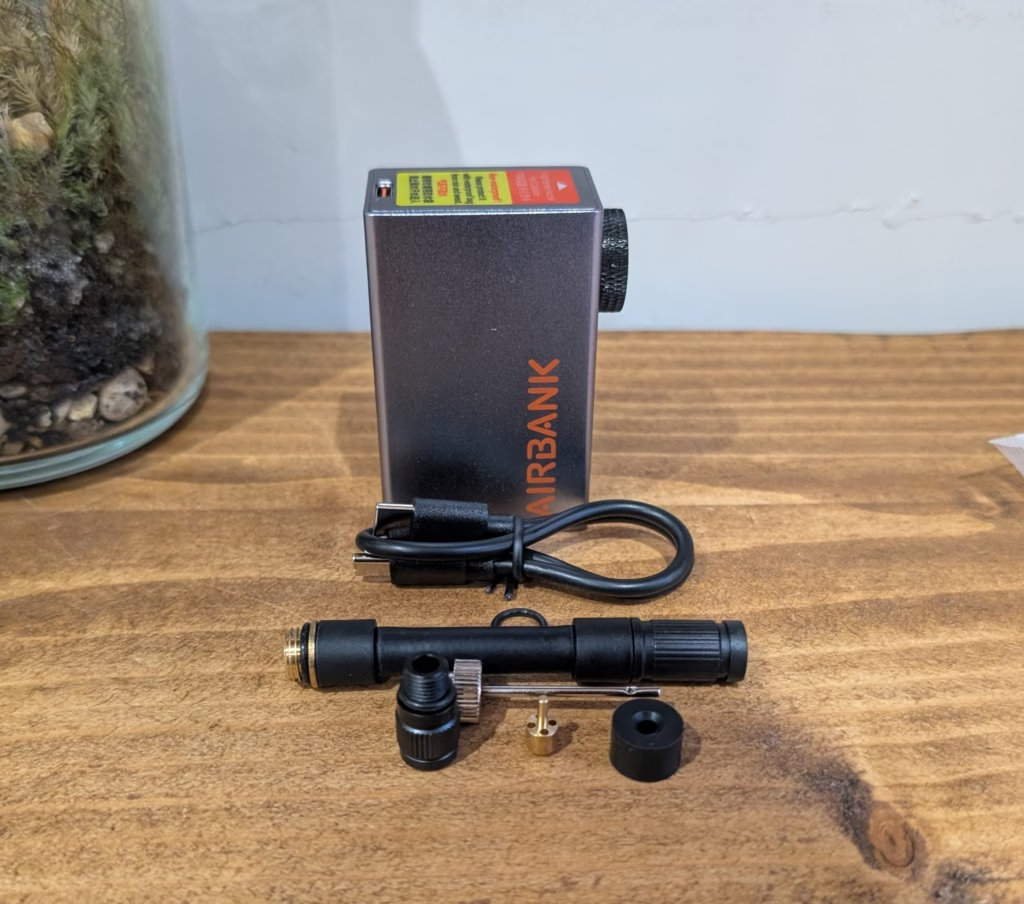
The Airbank Pocket 2 Pro follows the established design language of compact electric bike pumps, prioritising portability above all else. The form factor is genuinely impressive – at 50x29x70mm, it is comparable in size to a small power bank or a chunky car key fob. Several reviewers have described it as credit card sized, which is a slight exaggeration, but it does fit comfortably in a jersey pocket without creating an uncomfortable bulge.
The construction uses an aluminium body which provides decent durability whilst keeping weight down to the claimed 130g. I weighed my unit at 132g, which is close enough to the specification to be within manufacturing tolerance. The build quality feels solid in hand, and there is no creaking or flexing when applying pressure during use.
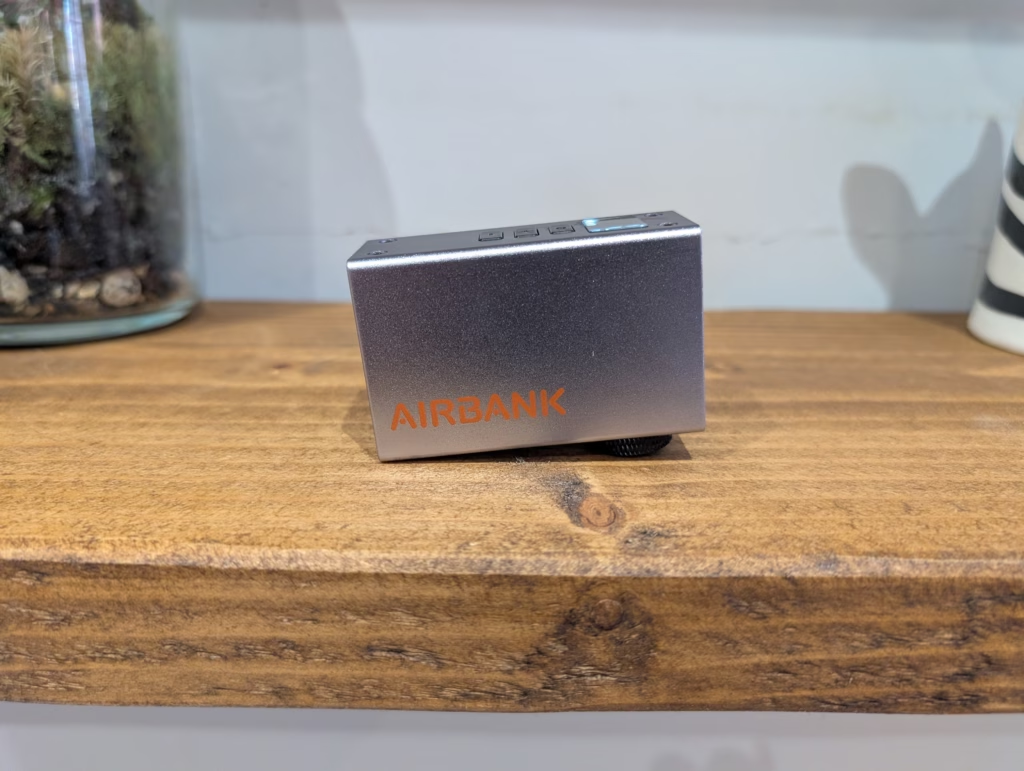
Airbank includes a silicone protective case with the pump, which serves a dual purpose. During operation, these electric pumps generate considerable heat – the motor and compression mechanism work hard, particularly when inflating to higher pressures. The silicone case provides insulation to prevent burns and also offers some protection against drops and scratches during storage. I found the valve head became noticeably hot after consecutive inflations, so the case is a worthwhile inclusion.
The package also includes a waterproof bag for storage, which is useful for keeping the pump protected in a saddle bag where it might encounter moisture. The accessory kit is comprehensive: you get an extension air hose, a ball needle for inflating footballs and basketballs, adapters for both Presta and Schrader valves, and a USB-C charging cable.
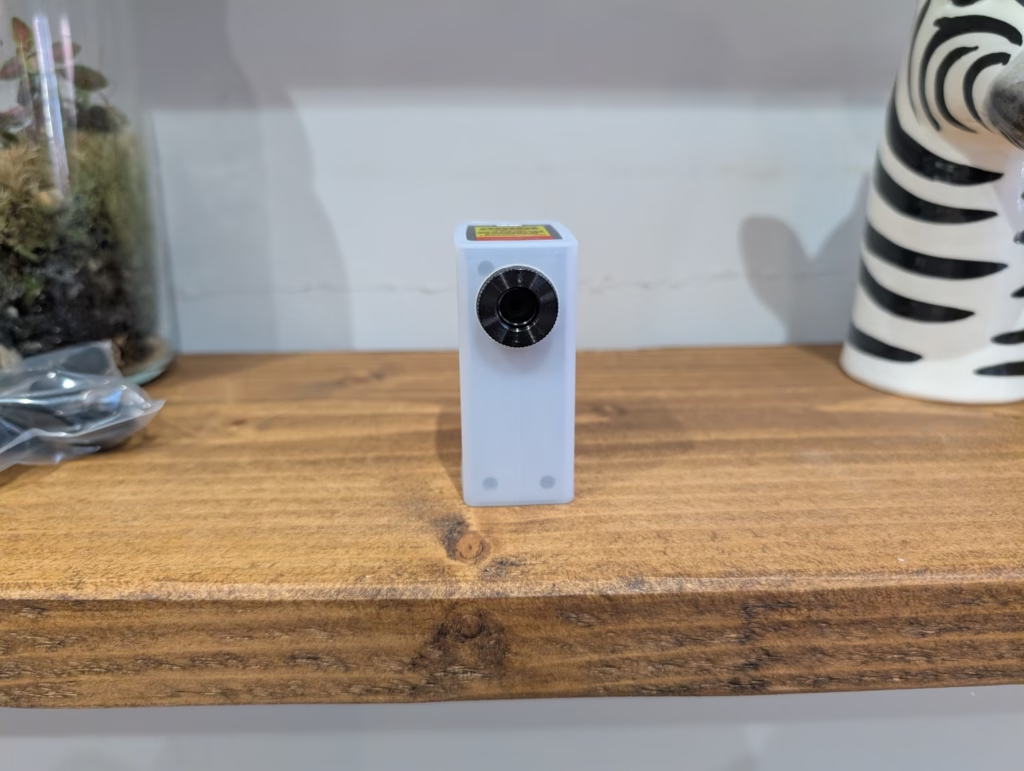
The valve connection system is straightforward. The pump body has a built-in connector that can be configured for either Presta or Schrader valves by rotating an internal rubber seal. For direct connection, you simply press the pump onto the valve. The included extension hose is essential for Presta valves with resin cores, as the heat generated during inflation could potentially damage these softer valve materials. I would recommend using the hose by default – it provides easier access in tight spaces and keeps the hot pump body away from the valve and tyre.
One design consideration is the air intake, which is integrated into the USB-C port. This is a clever space-saving solution, but it means you need to keep this port clear during operation. Blocking it will affect pump performance and could cause overheating.
Controls
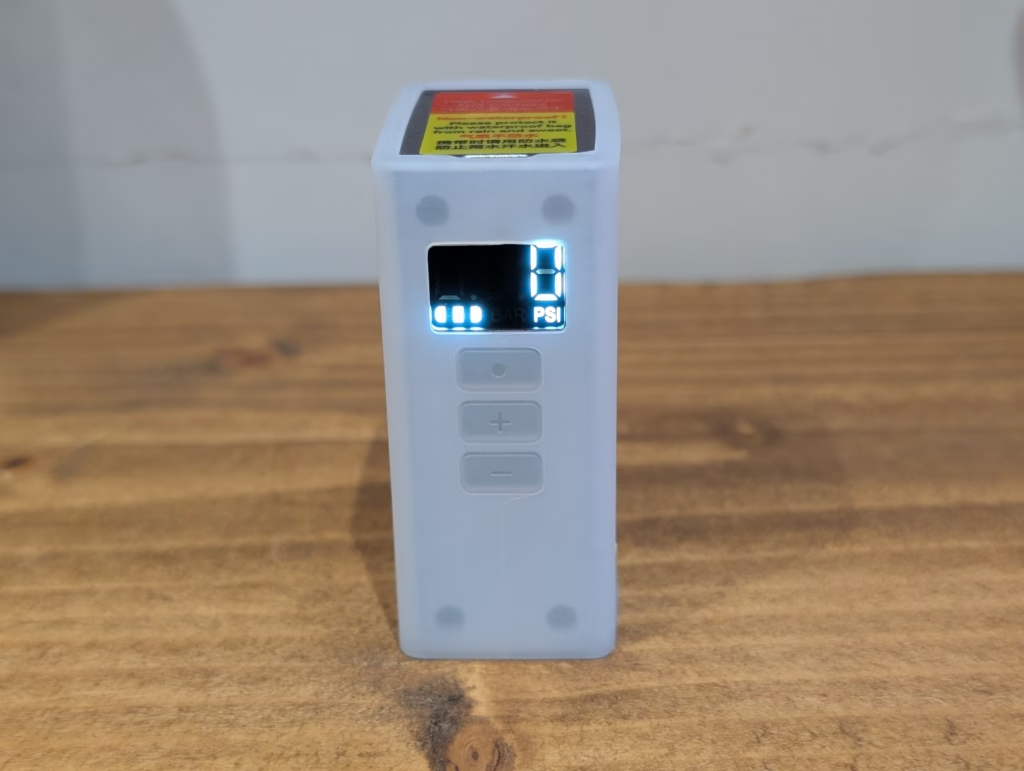
The control interface is pleasingly simple, consisting of three physical buttons and an LCD display. The power button sits at the top, with plus and minus buttons below for adjusting the target pressure. This layout is intuitive and easy to operate, even when wearing cycling gloves.
To power on the unit, you press and hold the power button for approximately two seconds. The LCD screen illuminates and displays the current pressure reading – or zero if no tyre is connected. The display is clear and readable in daylight, which is essential for outdoor use. I had no issues reading the screen in bright sunlight, though very direct sun at certain angles can cause some reflection.
Setting your target pressure is straightforward: use the plus and minus buttons to adjust in 1 PSI increments. A long press on either button allows faster scrolling through the pressure range. The pump remembers your last setting, which is convenient if you consistently inflate to the same pressure. For my road bike, I set it to 85 PSI and rarely need to adjust.
Once connected to a valve, pressing the power button again starts inflation. The pump is undeniably loud – this is true of all electric mini pumps I have tested, and the Airbank is no exception. The noise level is comparable to a small electric drill and will certainly attract attention if you are pumping up a tyre at a cafe stop. In open countryside, this is hardly an issue, but it is worth being aware of in quieter settings.
The auto-stop feature works reliably in my experience. When the pump reaches your set pressure, it stops automatically, accompanied by a beep to confirm completion. I tested the accuracy by checking with a separate digital gauge and found the Airbank consistently accurate to within 1-2 PSI of the displayed reading, which is acceptable for cycling purposes.
The battery indicator shows three bars when fully charged and depletes as you use the pump. I found the indicators reasonably linear – one bar remaining still provided enough power for at least one full inflation to 80 PSI on a road tyre.
A long press on the power button turns the unit off. If you forget, the pump automatically powers down after a period of inactivity to preserve battery life. The unit can also display pressure in Bar rather than PSI – a short press cycles through the available units.
Performance
In practical testing across several weeks, the Airbank Pocket 2 Pro performed admirably in various scenarios. I used it for regular pressure top-ups before rides, simulated roadside puncture repairs, and inflation from completely flat tyres.
For road cycling, the pump excels. My typical use case involves checking and topping up pressure before indoor trainer sessions and outdoor rides. The accuracy and speed make this a trivial task – connect to the valve, set the pressure, press the button, and wait less than a minute. Compared to manually pumping a floor pump, this is considerably easier, and the digital readout removes any guesswork.
I tested the pump’s claims by completely deflating a 700x25c tyre and inflating to 80 PSI multiple times in succession. The first three inflations completed within the claimed timeframe and without issue. The fourth inflation was noticeably slower, and by the fifth, the battery indicator showed only one bar remaining. The pump completed a fifth inflation but was clearly struggling by the end, with the motor sounding strained and the body very warm. This aligns with the manufacturer’s four-inflation claim, though I would consider three reliable inflations a more practical expectation if you want to maintain some reserve.
For mountain biking, the pump handles larger tyres adequately, though the increased air volume means longer inflation times and higher battery consumption per tyre. Running 29×2.2 tyres at 30 PSI, I managed three inflations from low pressure without issue. Inflating from completely flat took around 70 seconds, which matches the manufacturer claims.
Heat management is worth discussing. After consecutive inflations, the pump body becomes notably warm, and the valve head can become hot enough to be uncomfortable to touch immediately after disconnection. The silicone case helps with the body temperature, but I would recommend allowing a minute or two between inflations if possible. This is primarily a concern when testing limits rather than typical use – inflating a single tyre and pocketing the pump is unlikely to cause issues.
Tubeless tyre compatibility is a question many cyclists ask. For topping up sealed tubeless tyres, the Airbank works perfectly – the accurate pressure control is actually more useful here than with tubed tyres. However, for seating tubeless beads, this pump is not suitable. Seating a tubeless tyre requires a large, rapid burst of air volume that mini electric pumps simply cannot deliver. You will still need a floor pump with a pressure chamber, a compressor, or CO2 for initial tubeless setup.
The 30-minute charging time via USB-C is convenient and accurate in my testing. I recommend keeping a charging cable in your cycling bag and topping up after each use – the small battery means this is quick, and maintaining charge is sensible to have the pump ready when needed.
Compared to CO2 inflation, the Airbank is slower but reusable and more versatile. A CO2 cartridge will inflate a road tyre in seconds rather than under a minute, making it the better choice for competitive situations or long rides where speed matters. However, CO2 requires carrying multiple cartridges for repeated punctures, and many cyclists dislike the environmental impact and ongoing cost. For training rides and everyday use, the electric pump makes more sense.
Price and Alternative Options
| Preview | Product | Rating | Price | |
|---|---|---|---|---|
|
| AIRBANK Mini Bicycle Pump with Pressure Gauge, Pocket 2 PRO... | Buy on Amazon |
The Airbank Pocket 2 Pro is available on Amazon UK for £70 or directly from airbankpump.com for approximately £52, which includes free worldwide shipping. The direct purchase represents significantly better value if you are willing to wait for international delivery.
Airbank also offers the Minibike Pump Pocket SE, which is available for £40 from Amazon and can inflate to a maximum of 100 PSI with a reported 200-second run time and the ability to inflate two tyres to 80 PSI. It weighs just 93g, making it even more portable than the Pocket 2 Pro. For casual cyclists who prioritise weight savings and are happy with the lower specifications, this could be a sensible alternative.
The Cycplus AS2 Tiny Electric Bike Pump is £65 and can reach 100 PSI, matching the claims of the Minibike Pump Pocket SE. This is the entry-level option in the Cycplus range and lacks the real-time pressure display of the higher-end models.
The Cycplus AS2 Pro appears to be the closest competitor to the Airbank Pocket 2 Pro, with very similar dimensions, weight, and performance specifications. This costs £89 on Amazon UK, which is £19 more than the Airbank. Given the essentially identical specifications, this price difference is difficult to justify unless you have a strong preference for the Cycplus brand or find a good deal.
The Cycplus AS2 Pro Max at £106 offers increased battery capacity (600mAh versus 420mAh), faster inflation times (75 seconds versus 90 seconds to 120 PSI), and the ability to inflate four tyres to 120 PSI rather than two. For serious cyclists who need maximum capacity, particularly those riding long distances where multiple punctures are a concern, the Pro Max offers meaningful advantages. However, the increased size and weight (205g versus 130g) may be a consideration.
Budget alternatives exist from various manufacturers, with some options available for £35-40. However, I would approach these with caution. Cheaper pumps often use lower-quality components, less accurate pressure sensors, and may have shorter lifespans. The battery management and heat dissipation in budget options tend to be inferior, which can affect both performance and safety. For equipment you may depend on during a ride, I think the additional investment in a reputable brand is worthwhile.
The value proposition of the Airbank Pocket 2 Pro is clear: it offers performance matching the Cycplus AS2 Pro at a lower price point. Whether you purchase from Amazon or directly from Airbank, you are getting good value compared to the competition.
Overall
Similar to the Cycplus, I would not say an electric pump completely replaces CO2. If I plan to go on a long ride, I will still pack CO2. However, I am terribly forgetful, and I like the reassurance of leaving an electric bike pump in my bike saddle bag as an alternative.
I also keep an electric bike pump in my backpack, which I use for shorter rides to the gym or commuting to the office. Again, it just gives me the reassurance that I have something there to pump up my tyre if needed, and I do not need to remember to check how many CO2 cartridges I have left.
I think these pumps are also better than CO2 for casual cyclists, though, for those people, I would still be tempted to carry a mini manual pump as a backup. The electric pump’s battery can deplete over time even when not in use, and if you only cycle occasionally, there is a risk of picking up a flat pump when you need it most. A manual pump requires no power and will work every time, even if it requires more effort.
For indoor training setups, the Airbank is excellent. The accurate pressure display makes it easy to maintain consistent tyre pressures between sessions, which is more important than many cyclists realise for trainer performance and tyre wear. I have started leaving mine permanently next to the turbo trainer for pre-ride checks.
The pump’s limitations should be acknowledged. It is loud, which may bother some users. The heat generated during operation means consecutive inflations require care. The battery capacity, whilst sufficient for typical use, means it cannot match the endurance of a good manual pump for extended multi-puncture scenarios. And it absolutely cannot seat tubeless tyres – for that you need a different tool entirely.
On the positive side, the build quality is solid, the specifications are accurate, the price is competitive, and the convenience factor is substantial. Being able to set an exact pressure and have the pump stop automatically is genuinely useful, and the compact size means there is no excuse not to carry it.
I was a big fan of the different Cycplus AS2 electric bike pump models, and the Airbank Pocket 2 Pro is basically the same as the Cycplus AS2 Pro but at a lower price point, so it therefore gets a strong recommendation. If you are in the market for an electric mini bike pump and want good value without compromising on features, the Airbank Pocket 2 Pro deserves serious consideration.
For those already owning a Cycplus AS2 Pro, there is no compelling reason to switch. But for new buyers, the Airbank represents the better value proposition in this category.
Airbank Pocket 2 Pro Mini Bike Pump Review
Summary
The Airbank Pocket 2 Pro delivers the same core performance and feature set as the Cycplus AS2 Pro while undercutting it significantly on price, making it one of the strongest value options in the electric mini bike pump category. It is compact enough to carry on every ride, accurate enough for consistent pressure management, and powerful enough for realistic roadside use on both road and mountain bikes. While it does not replace CO2 or a manual pump in every scenario, it strikes an excellent balance between convenience, reliability, and cost, particularly for regular cyclists who want a dependable, reusable backup solution.
Overall
95%-
Overall - 95%95%
Pros
Excellent price-to-performance ratio compared with direct competitors.
Accurate digital pressure display with reliable auto-stop functionality.
Compact, well-built design that is genuinely practical to carry on rides.
Cons
Loud operation may be intrusive in quiet environments.
Generates noticeable heat during consecutive inflations.
Limited battery capacity compared with manual pumps for multiple flats.
Last update on 2026-02-12 / Affiliate links / Images from Amazon Product Advertising API

I am James, a UK-based tech enthusiast and the Editor and Owner of Mighty Gadget, which I’ve proudly run since 2007. Passionate about all things technology, my expertise spans from computers and networking to mobile, wearables, and smart home devices.
As a fitness fanatic who loves running and cycling, I also have a keen interest in fitness-related technology, and I take every opportunity to cover this niche on my blog. My diverse interests allow me to bring a unique perspective to tech blogging, merging lifestyle, fitness, and the latest tech trends.
I’m proud to share that Vuelio has consistently ranked Mighty Gadget as one of the top technology blogs in the UK. With my dedication to technology and drive to share my insights, I aim to continue providing my readers with engaging and informative content.