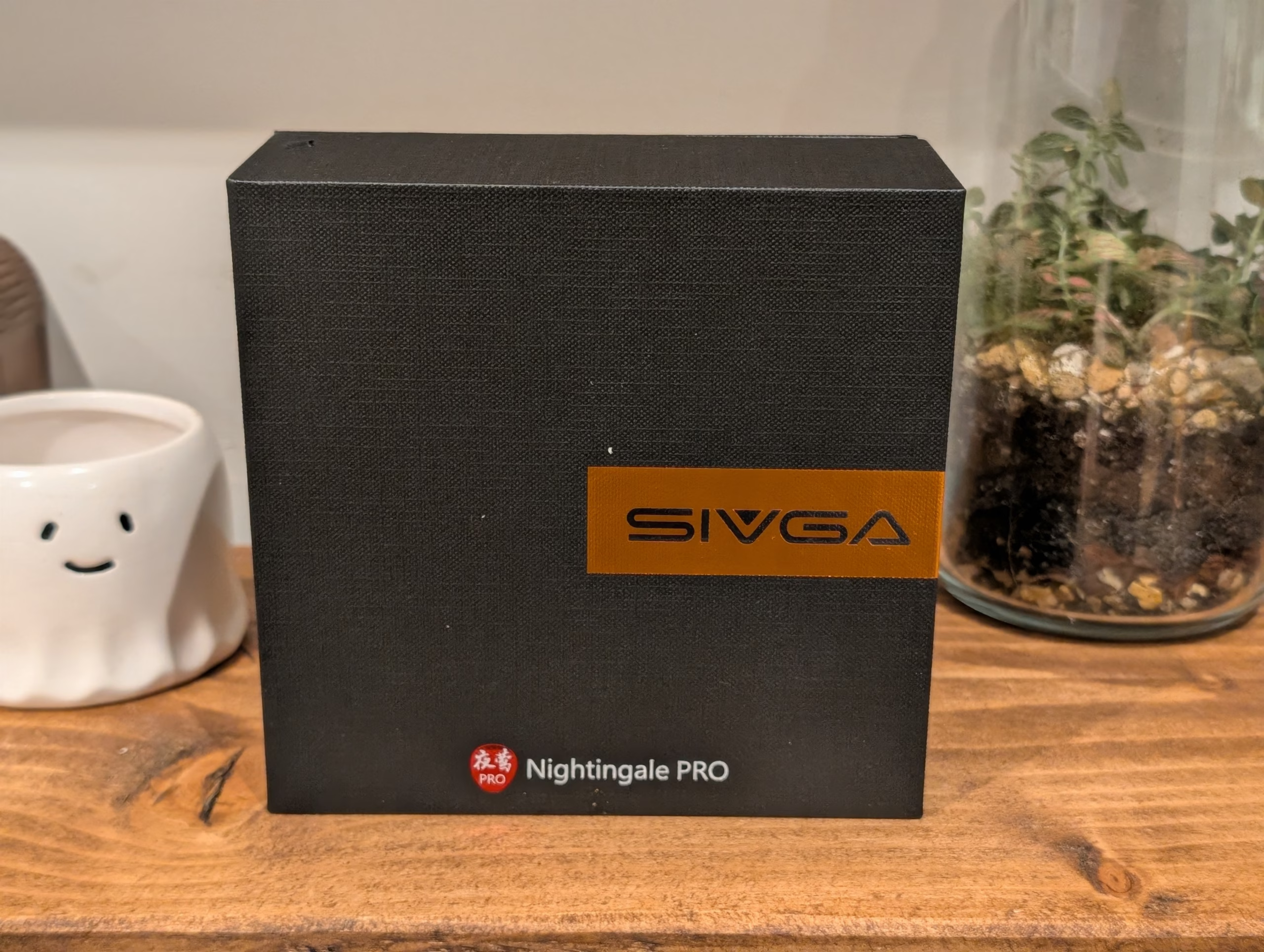
SIVGA Nightingale PRO Review – In-Ear Planar Magnetic Headphones
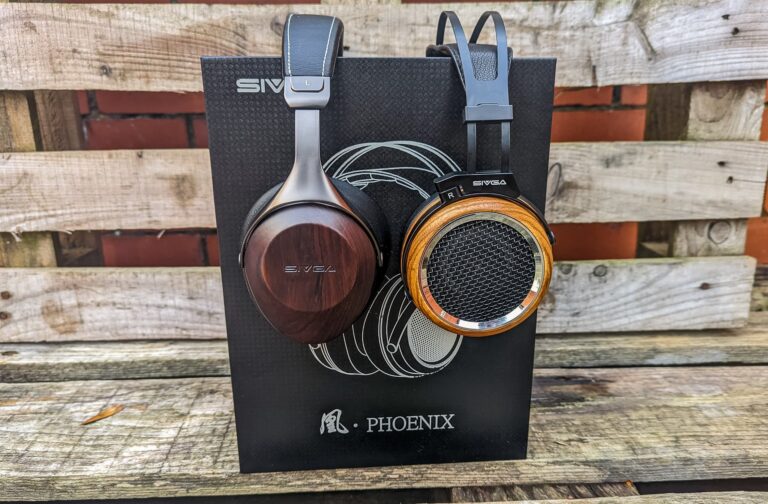
I have previously received the SIVGA Phoenix Headphones and Robin (SVO21) Headphones and was impressed with the overall performance.
One of the main characteristics of SIVGA earphones is the use of wood in their products, and the same is true for their latest launch, the SIVGA Nightingale PRO.
Unlike my previous reviews, the Nightingale PRO are in-ear planar magnetic headphones.
Related Reviews
- SIVGA Robin (SVO21) Headphones Review
- SIVGA Phoenix Headphones Review
- Audeze MM-100 Planar Magnetic Headphones Review
- Fosi Audio K7 Review
- Etymotic ER2XR-BT Earphones with Etymotion Wireless Bluetooth Cable Review
Specification
| Specification | Value |
| Transducer Type | Planar Magnetic Driver |
| Driver Size | 14.5 mm |
| Frequency Response | 20 Hz – 40 kHz |
| Sensitivity | 107 dB +/- 3 dB |
| Impedance | 16 $Omega$ +/- 15% |
| Cable Length | 1.25 m +/- 0.2 m |
| Connector Type | 4.4 mm Balanced |
| Earphone Interface | 0.78 mm 2-pin |
| Weight | 14 g |
The retail packaging for the Nightingale PRO includes the following items:
- 1x Pair of Nightingale Pro earphones.
- 1x Hard storage case.
- 1x Detachable cable (4.4 mm balanced plug).
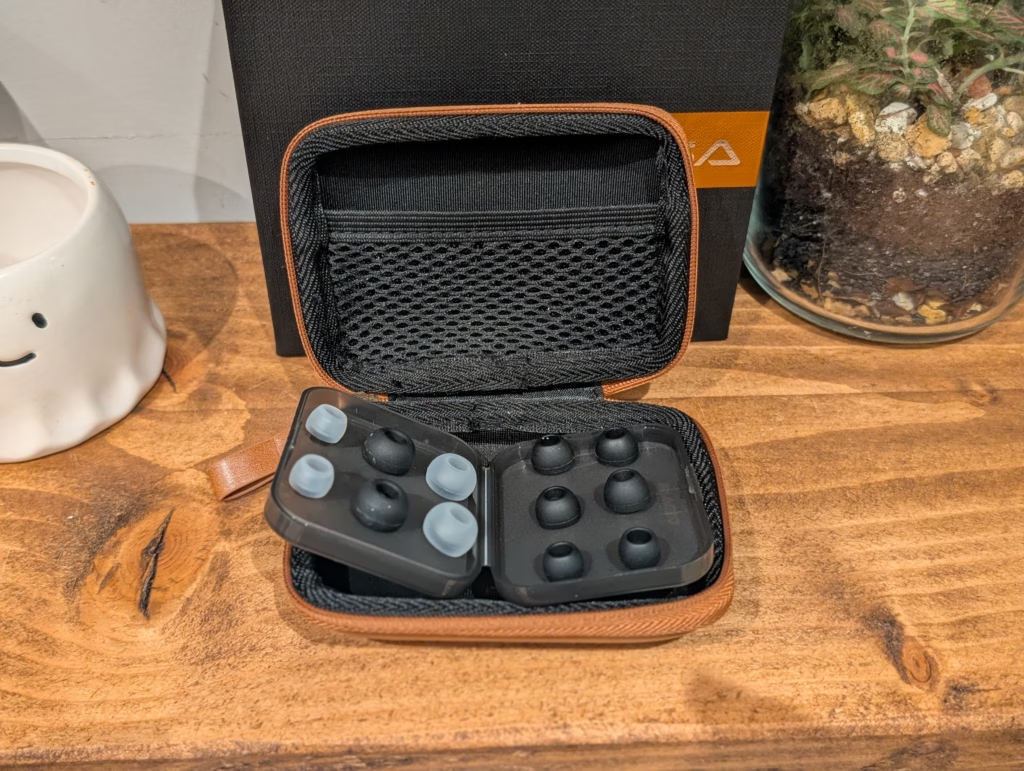
- 2x Pairs of Ear Tips (Size S).
- 2x Pairs of Ear Tips (Size M).
- 2x Pairs of Ear Tips (Size L).
- 1x User Manual.
Features
Acoustic Architecture and Driver Technology
The Nightingale PRO utilises a proprietary planar magnetic driver system designed to manage sound production through magnetic fields rather than traditional dynamic coils.
- Driver Size and Type: The unit features a substantial 14.5 mm planar magnetic driver.
- Diaphragm Construction: The internal assembly incorporates a newly developed composite diaphragm measuring 0.008 mm in thickness. This is bonded with an ultra-thin 0.006 mm aluminium ribbon conductor. The reduced mass of the diaphragm is engineered to facilitate faster transient response and wider frequency extension.
- Magnetic Structure: The driver is powered by a multi-magnetic array consisting of high-performance neodymium magnets. This dual-magnet structure is intended to increase efficiency and provide consistent control over the diaphragm movement across the frequency spectrum, covering 20 Hz to 40 kHz.
Design and Build Materials
The aesthetic and structural design of the earphone housing combines natural materials with functional manufacturing processes.
- Zebrawood Faceplate: The outer faceplate is crafted from Zebrawood. During manufacturing, the wood undergoes sanding, polishing, and coating. This process creates a dense, protective outer layer intended to improve durability while leaving the natural wood grain visible.
- Form Factor: The earpieces are designed as in-ear monitors (IEMs) with a specific nozzle angle to fit the ear canal. The total weight of the unit is approximately 14 g.
Cable Specification and Connectivity
The Nightingale PRO includes a high-specification cable designed for audio signal transmission and durability.
- Cable Composition: The cable is an 8-strand braid comprising 26 AWG Litz wires. The core material is a hybrid combination of single-crystal copper and silver-plated single-crystal copper. This hybrid approach attempts to utilise the conductive properties of both metals to balance low and high-frequency transmission.
- Connectors: The cable connects to the earphone housing via a standard 0.78 mm dual-pin interface, allowing for future cable replacement or upgrades.
- Termination: The source end of the cable features a 4.4 mm balanced plug. Balanced connections are typically utilised in high-fidelity audio to reduce electrical noise and improve channel separation compared to standard 3.5 mm single-ended connections.
Design / Build Quality
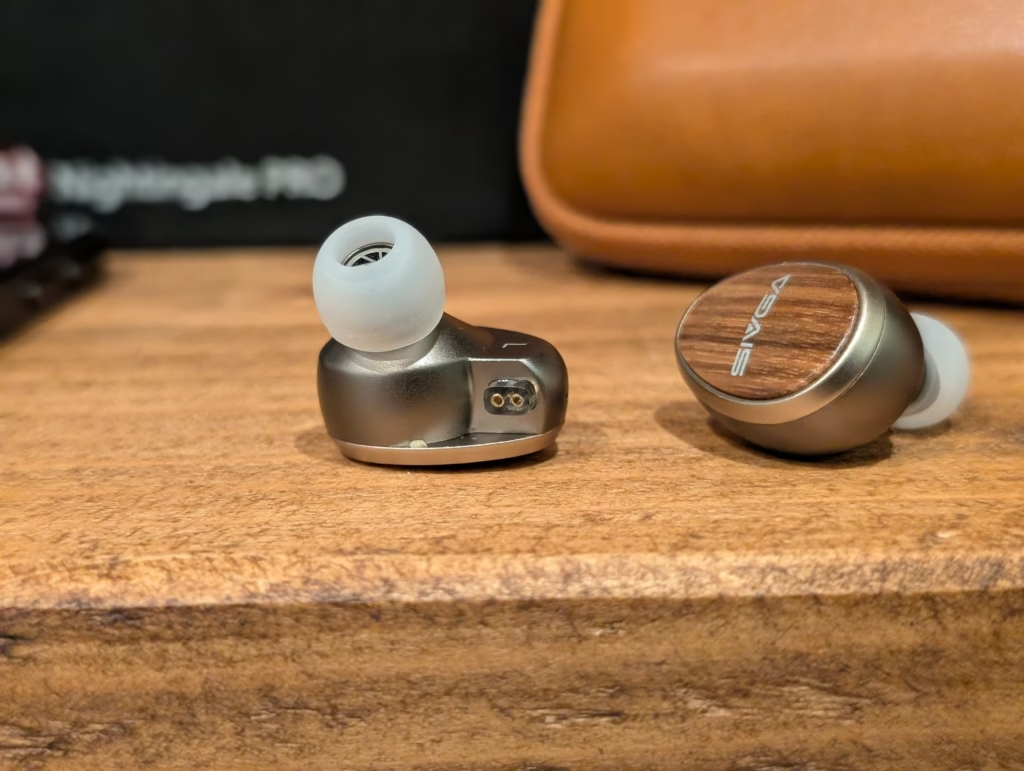
The Nightingale PRO has the signature SIVGA aesthetic that prioritises natural materials with an artisanal finish. The Zebrawood faceplates on my review unit display a striking grain pattern that varies between each earpiece, which is to be expected with natural wood construction. The manufacturing process has left the wood with a smooth, tactile finish rather than the thick layers of resin that some competing wooden IEMs employ. I’d say this approach looks more organic and arguably more premium, though it may require slightly more care over time.
The earpiece housings themselves are reasonably compact, though the shape is slightly unusual. The nozzle is noticeably stubby, which created some initial challenges with achieving a secure fit. I found that using large tips provided a better seal and more stable positioning compared to the medium size that I typically use with other IEMs. This shorter nozzle design is likely a compromise to accommodate the 14.5 mm planar driver within a relatively small housing, but it’s worth noting for those who prefer longer nozzles for comfort reasons.
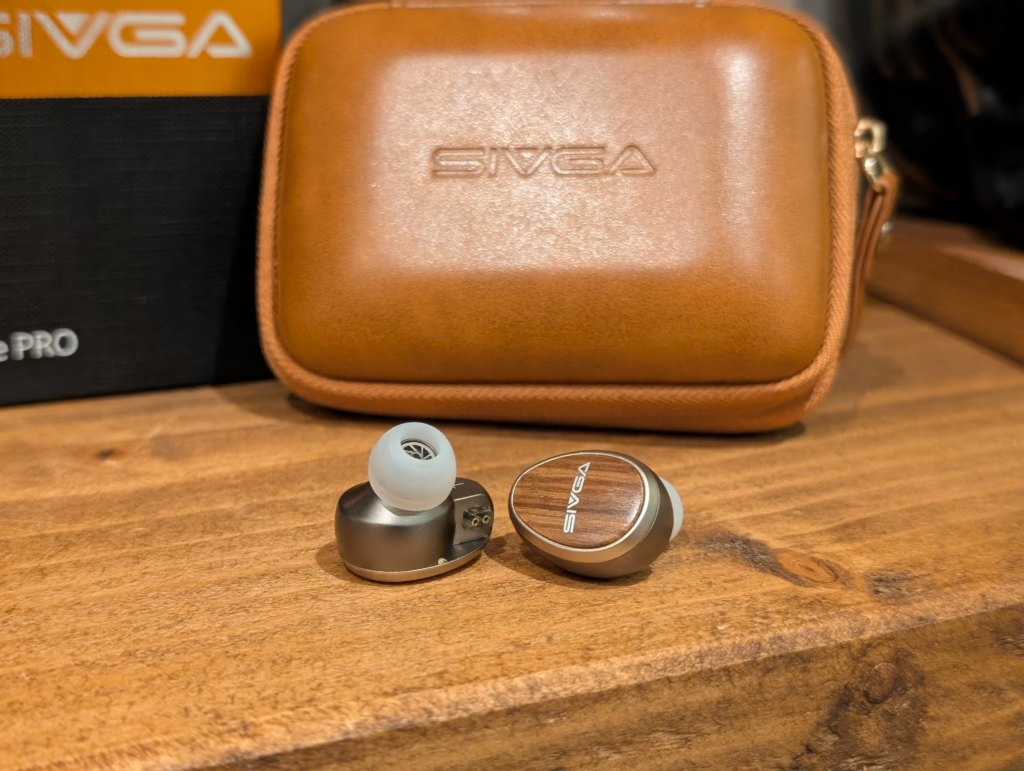
The cable connection uses recessed 2-pin connectors that sit partially behind the faceplate. This design choice looks clean but can make cable swapping slightly more fiddly than flush-mounted alternatives. The connectors are well-aligned and showed no signs of looseness during my testing period.
Build quality feels solid overall. The housing appears to be constructed from a composite material with good density, and there are no visible gaps or rough edges. The wood faceplates are securely attached, though I’d be cautious about exposing them to moisture given the natural material composition.
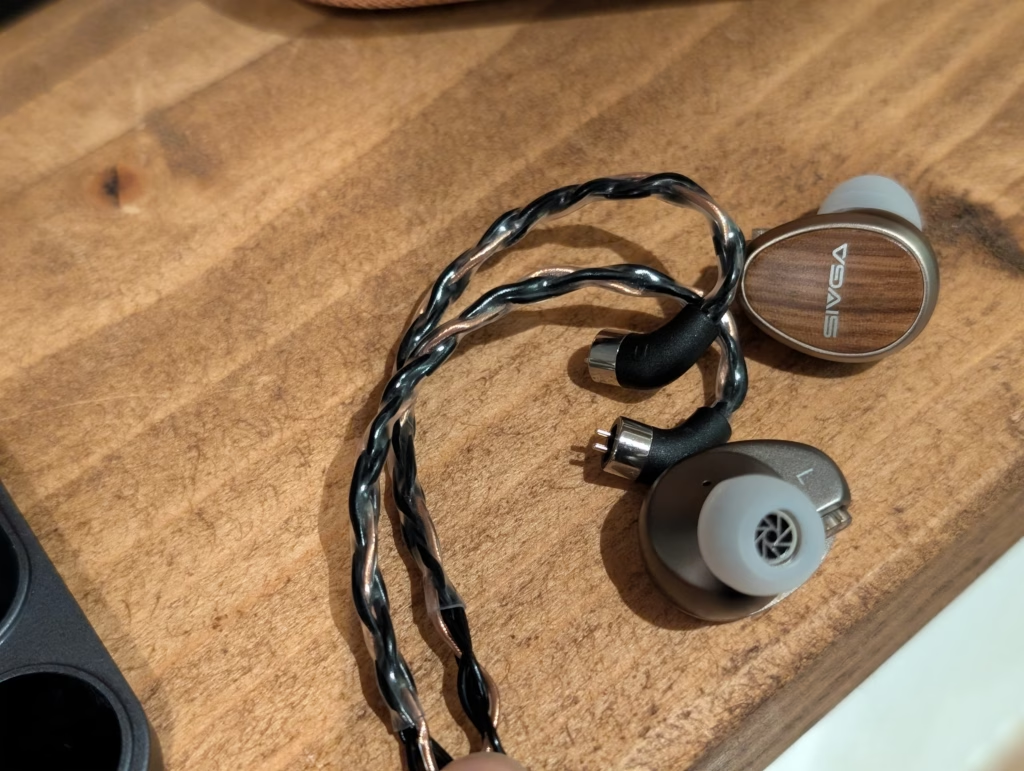
The included cable is an 8-strand braided design with a hybrid copper and silver-plated copper construction. It’s a decent cable, though it exhibits some memory and tends to retain kinks from storage. The 4.4 mm balanced termination is a deliberate choice aimed at enthusiasts with compatible equipment – the Khadas Tea Pro DAC I used for testing has a 4.4 mm jack, which made this convenient. However, casual users or those with standard 3.5 mm outputs will need to purchase an adapter separately. The cable does show some microphonic behaviour when worn, particularly if you’re moving about, though it’s not excessive for this type of construction.
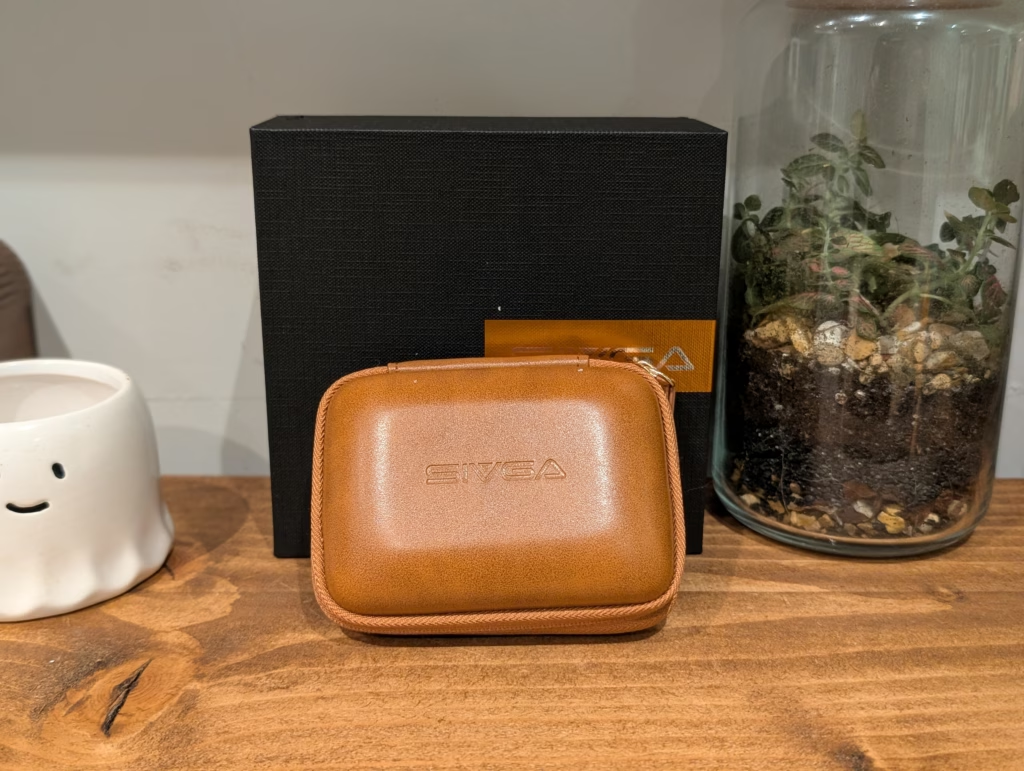
The hard storage case is functional and attractive with its tan leather coating. It’s adequately sized to protect the IEMs during transport, with sufficient space for the earphones and cable. The case material is a semi-rigid construction that should withstand typical daily use.
Comfort
Comfort with the Nightingale PRO is acceptable but not exceptional. The compact size works in its favour for those with smaller ears, but the stubby nozzle and specific shell shape mean fit is somewhat dependent on finding the right ear tip combination.
With large tips fitted, I achieved a reasonably secure seal that remained stable during typical listening sessions at my desk. However, I wouldn’t describe these as ideal for active use or extended wearing periods. The lack of depth in the nozzle means the earpieces don’t sit as deeply as some other IEM designs I’ve tested.
Most of my experience is with TWS earbuds, and I find that these tend to fit a bit better as there is no cable pulling on things, so my opinion here is slightly skewed.
Isolation is mediocre. The shallow fit means there’s less passive noise attenuation than deeper-inserting IEMs provide. This isn’t necessarily a dealbreaker for home listening, but commuters or those in noisy environments might find the Nightingale PRO less effective at blocking external sound compared to alternatives with better seal characteristics.
I experienced no discomfort or pressure points during extended listening sessions, though I did need to readjust the fit occasionally, but the around ear cable design keeps them a bit more secure.
The wood faceplates add a nice aesthetic touch, but don’t contribute meaningfully to comfort – the primary consideration here is the nozzle design and finding appropriate tips.
Sound Quality
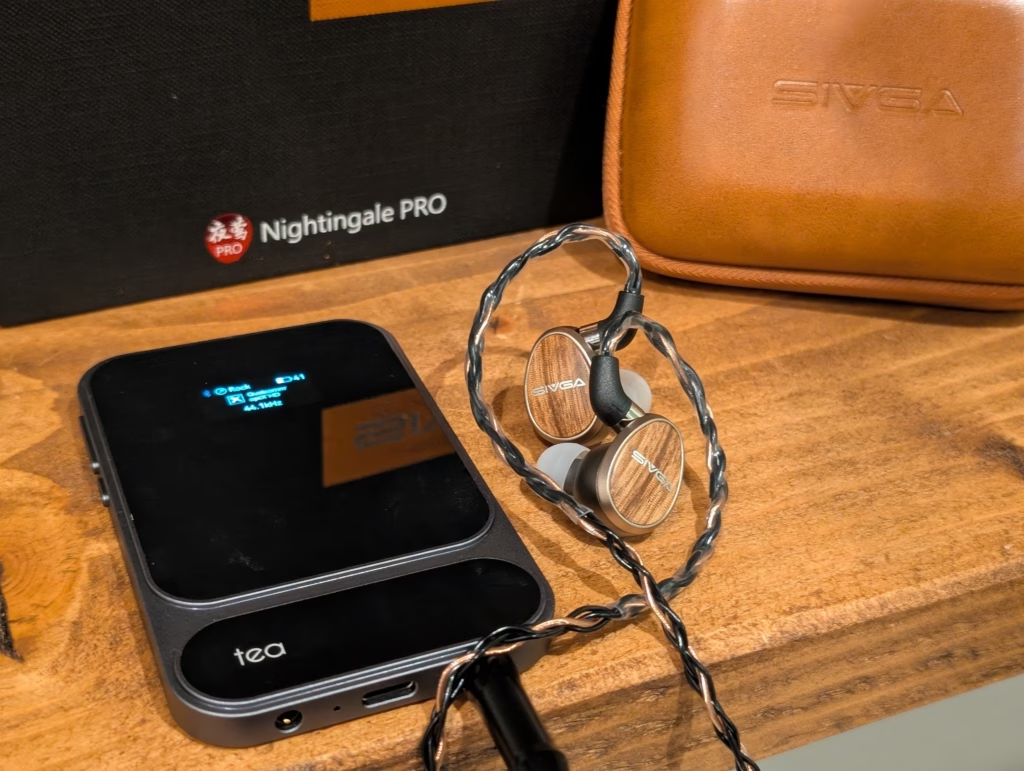
To test these, I used the Khadas Tea Pro DAC I recently reviewed, which conveniently has a 4.4mm headphone jack.
The SIVGA Nightingale PRO is not tuned to be a “fun” or overly musical IEM in the traditional commercial sense. It skips the thick, warm, and bass-heavy tuning often found in consumer audio in favour of a signature that prioritises detail, clarity, and transparency across the frequency spectrum.
Bass Response
The bass region is where the Nightingale PRO will prove most divisive. In straightforward terms, there isn’t much of it. The sub-bass extension reaches down adequately from a technical standpoint, but the overall quantity is significantly below what most contemporary IEMs deliver.
What bass presence exists is tightly controlled with excellent speed and definition. You can discern individual bass notes clearly, and there’s no bloom or overhang. The planar driver exhibits the characteristic fast decay that this driver type is known for, which suits complex bass passages well from a technical perspective.
Electronic music, hip-hop, modern pop, and similar styles that depend on sub-bass rumble or midbass punch sound a bit thin and lacking in foundation.
The upside is exceptional clarity in the lower registers. Bass guitars remain distinct and textured, and you can follow bass lines with precision. For acoustic genres with minimal bass content, or for analytical listening where you want to examine the bass region without it dominating, the Nightingale PRO serves its purpose.
I tend to favour more bassy genres, so with those tracks, I tended to tweak the EQ settings on the Khadas to get a sound signature a bit closer to my tastes.
Midrange Performance
The midrange is where the Nightingale PRO demonstrates its priorities. With minimal bass masking, the mids have exceptional clarity and a forward, almost spotlight-like presentation. Instruments in this region are rendered with fine detail retrieval and good separation.
Both male and female vocals sit prominently in the mix. There’s a slight thinness to vocal weight – a direct consequence of the lean bass and lower midrange tuning – but the articulation and intelligibility are excellent. You can pick out subtle vocal inflections and breathing that might be obscured on warmer-tuned IEMs.
The midrange tonality is decidedly neutral to slightly cool. SIVGA hasn’t added warmth or body to compensate for the bass deficiency, which maintains consistency but may sound sterile to those accustomed to more coloured presentations. Acoustic instruments like guitars and pianos are reproduced with good accuracy, though they lack some of the weight and resonance that comes from fuller bass support.
One area where the Nightingale PRO surprised me positively was with brass instruments. Trumpets, saxophones, and similar instruments have a pleasing combination of bite and texture. The slightly elevated upper midrange energy helps these instruments cut through without becoming harsh or fatiguing. Jazz recordings featuring horn sections sound engaging and well-balanced.
Soundstage and imaging are decent. The presentation is primarily inside the head with moderate width and limited depth perception. This is partly attributable to the tuning, as the lack of bass foundation makes it difficult to establish a strong sense of spatial depth. Imaging accuracy is reasonable; you can localise instruments adequately, but the precision isn’t at the level of higher-end all-BA configurations I’ve tested in similar price ranges.
The midrange does exhibit good layering ability. Complex arrangements with multiple instruments playing simultaneously remain coherent, and you can focus on individual elements without them blurring together. This is a strength of the planar driver implementation and contributes to the analytical character of these IEMs.
Treble
The treble range is elevated and carries a consistent, uniform energy. This is not a dark or smooth IEM; it is energetic and can be tiring for those sensitive to high frequencies. The upper mids are energetic, and this energy carries over into the lower treble without becoming uneven or peaky.
This elevation contributes to fantastic sparkle and agility, making it a strong choice for “treble heads” who value airiness and micro-details. The layering and separation of treble notes are excellent, providing a highly technical listening experience
Price and Alternative Options
The SIVGA Nightingale PRO have an RRP of £229, while the non-Pro model was £216 but at the time of writing was discounted to £173.
Moondrop Blessing 3 (around £320): A well-regarded hybrid that provides excellent technical performance with more neutral-leaning tuning.
7Hz Timeless (around £220): Another planar magnetic option with more crowd-pleasing tuning and better bass response.
Etymotic ER4SR (around £250): For those genuinely seeking analytical sound, the Etymotic offers similar detail retrieval with arguably more accurate tonality, though with even more polarising fit requirements.
Overall
The SIVGA Nightingale PRO is a unique and technically proficient in-ear monitor that appeals to a specific taste.
The build quality is good, with attractive natural wood aesthetics and solid construction. The included cable and accessories are adequate, though the 4.4 mm-only termination limits immediate compatibility.
Sound quality is where the Nightingale PRO diverges significantly from contemporary trends. The bass is lean to the point of deficiency for most genres, the midrange is clear and detailed but somewhat thin, and the treble is extended and energetic to the point of potential fatigue. This combination creates an analytical, detail-focused presentation that works well for specific acoustic genres but proves unsuitable for much modern music.
Overall, the SIVGA Nightingale PRO lands as a niche but technically capable option that prioritises clarity, speed, and treble energy over the sort of full-bodied, bass-rich tuning most listeners are used to. Its combination of planar driver performance, natural wood aesthetics and generally solid build makes sense for more analytical listeners who gravitate towards acoustic, jazz, and vocal-focused material, especially if they already own a balanced-output source and are happy to experiment with tips and EQ. For anyone who prefers a warmer, more forgiving presentation or listens predominantly to bass-driven modern genres, there are more versatile alternatives at similar money, but for the right listener, the Nightingale PRO offers a distinctive, detail-first take on planar IEMs that stands apart from the usual crowd-pleasing tunings.
SIVGA Nightingale PRO Review
-
Overall - 85%
85%
Summary
The SIVGA Nightingale PRO is a well-built and beautifully finished pair of in-ear planar magnetic headphones that deliver a highly detailed, analytically focused sound. Their lean bass, forward mids and energetic treble create a presentation that suits acoustic, jazz and vocal-centric music but will feel thin and fatiguing for listeners who prefer a fuller, warmer or more modern tuning. With excellent craftsmanship, strong technical performance and a distinctive aesthetic, the Nightingale PRO stands out as a niche but capable option for detail-oriented listeners who value clarity and speed above all else.
Pros
- Exceptional detail retrieval and clarity
- Attractive natural wood design and solid build
- Fast, clean planar driver performance
Cons
- Very lean bass limits versatility
- Treble can be fatiguing on longer sessions
- Fit and shallow nozzle may be inconsistent for some users

![Competition: Win EPOS Sennheiser GSP 601 Gaming Headphones & GSX 200 Soundcard – Headphones for PC, PS5 & Xbox Series X [Now closed]](https://mightygadget.co.uk/wp-content/uploads/2026/03/EPOS-Sennheiser-GSP-602-review-scaled-1-768x420.jpg)