
OnePlus Watch Lite Review vs OnePlus Watch 3
I have previously reviewed the OnePlus Watch 3 and the OnePlus Watch 3 43 mm, and I think they are by far the best WearOS watches I have used to date. I have gone on to recommend them to friends and colleagues, and the general consensus is that they are excellent smartwatches that strike an impressive balance between functionality and battery life.
Recently, the OnePlus Watch Lite was launched, which, as you can probably guess, is a more affordable alternative to the Watch 3 with slimmed-down features and design. The OnePlus Watch 3 has an RRP of £319, while the Lite is priced at £179. That is a significant price difference of £140, which naturally raises the question of what compromises OnePlus has made to achieve this lower price point.
The main reason the OnePlus Watch Lite is so much more affordable is that it is not a WearOS watch. Instead, it runs OxygenOS Watch 7.1, which is a proprietary real-time operating system developed by OnePlus. This makes it more comparable to watches from Xiaomi, Honor, Huawei and, to a lesser extent, Garmin. It has extensive features built into it, but you cannot install third-party apps on the watch for additional functionality. If you are someone who relies on Spotify, Google Maps navigation, or other third-party applications on your wrist, this will be a notable limitation.
One of the standout features of the Watch 3 was its incredible battery life, with it lasting around 5 days in smart mode. However, with the Lite using a more basic OS, it offers significantly better battery life – up to 7 days during typical usage or 4 days with the Always-On Display enabled. For those who find frequent charging frustrating, this extended battery life could be a decisive factor.
Related Reviews
- OnePlus Watch 3 43 mm Review
- Xiaomi Watch S4 41mm Review
- Garmin Fenix 8 Review
- Amazfit T-Rex 3 Multi-Sport Smart Watch Review
- Pininfarina Senso Hybrid Smart Watch Review
- Xiaomi Watch S3 Smartwatch Review
OnePlus Watch Lite vs OnePlus Watch 3 Specification
| Specification | OnePlus Watch Lite | OnePlus Watch 3 |
| Material & Finish | Silver/Black Stainless Steel Case, Plastic Base | Black/Silver Titanium Bezel, Stainless Steel Case |
| Cover Glass | 2.5D Curved Glass | Sapphire Crystal |
| Dimensions & Weight | 44.98 x 44.98 x 8.9 mm, 35 g (body) | 46.6 x 47.6 x 11.75 mm, 49.7 g (body) |
| Display | 1.46″ AMOLED, 464×464, 317 PPI, up to 3000 nits peak | 1.50″ LTPO AMOLED, 466×466, up to 2200 nits peak |
| Processor/Chipset | BES2800BP MCU | Snapdragon W5 + BES2800BP MCU |
| Storage | 4 GB eMMC | 32 GB |
| Operating System | OxygenOS Watch 7.1 | Wear OS by Google + RTOS |
| Battery Life | 339 mAh, up to 10 days max (7 days typical) | 16 days (power saver) / 5 days (smart) / 3 days (heavy use) |
| Connectivity | Bluetooth 5.2, Dual-band GPS, NFC (non-payment) | Wi-Fi 2.4G/5G, Bluetooth 5.2, Dual-band GPS, NFC with Google Wallet |
| Mobile Payments | Not supported | Google Wallet supported |
| Durability | 5ATM, IP68 | MIL-STD-810H certified, 5ATM, IP68 |
Design and Unboxing

One of the first things I noticed when unboxing the OnePlus Watch Lite was just how thin it is. At only 8.9 mm from top to bottom, it is remarkably slim for a smartwatch and looks more like a traditional timepiece when worn on the wrist. This thinness is a genuine achievement, as many smartwatches tend to look bulky and obviously electronic. The Watch Lite manages to avoid this pitfall entirely.
The box contents are straightforward – you get the watch itself with a pre-attached strap, an integrated charging cable, a user guide, and a warranty booklet. OnePlus has sensibly included the charging cable but note that the charging base is sold separately, which feels like a slight cost-cutting measure. For most users, the cable alone should be sufficient, but those who prefer a stand will need to factor in the additional cost.
The casing is constructed from 316L stainless steel, which gives it a premium feel that belies its price point. You can choose between a silver or black finish, both of which look smart and professional. The build quality is genuinely impressive for a watch at this price – there is no flex or creaking when you handle it, and the rotating crown has a satisfying click with subtle haptic feedback.
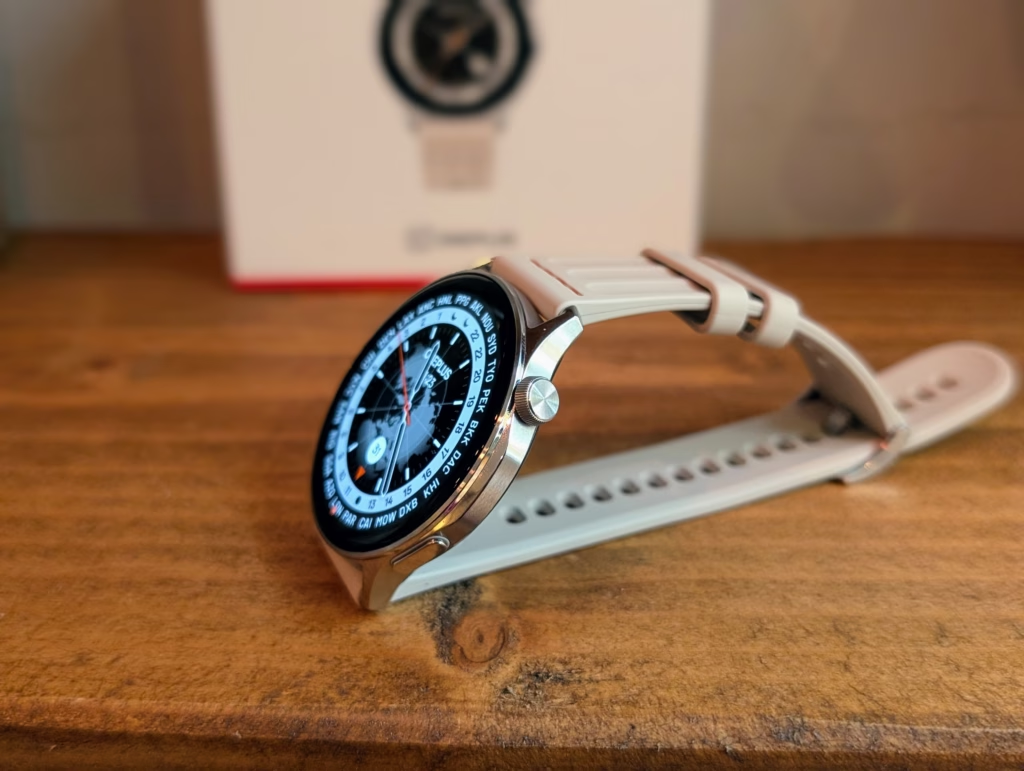
The default strap is made from fluororubber with a stainless steel buckle. I found it comfortable for extended wear, including during workouts and while sleeping. The subtle red stitching detail on the strap adds a nice touch of visual interest without being flashy. Importantly, the watch uses standard 22 mm bands, so you can easily swap them out for leather, metal, or fabric alternatives if the default does not suit your style.
At just 35 grams for the watch body alone (59 grams with the strap), the Watch Lite is noticeably lighter than most smartwatches. This lightness makes it particularly comfortable for sleep tracking and extended wear. I have worn it continuously for over two weeks and experienced no skin irritation or discomfort, which is not something I can say for all smartwatches I have tested.
Set Up and OHealth App


The OnePlus Watch Lite pairs with smartphones via the OHealth app, which is available for both Android and iOS devices. This cross-platform compatibility is notable, as the Watch 3 with Wear OS is limited to Android devices only. If you are in a household with a mix of iPhone and Android users, or if you switch between platforms, the Watch Lite offers more flexibility.
Setting up the watch was straightforward. After downloading OHealth, you simply enable Bluetooth, scan for the device, and follow the on-screen prompts. The app requests various permissions for notifications, calls, contacts, and health data. The entire process took me less than five minutes from opening the box to having a fully functional watch on my wrist.
One unique feature of the Watch Lite is its dual-phone pairing capability. You can connect the watch to two smartphones simultaneously – even if one runs Android and the other runs iOS. This could be useful for people who carry both a personal and work phone, allowing them to receive notifications from both devices on a single watch. It is a thoughtful addition that would not have been possible with Wear OS.
The OHealth app itself is well designed with a clean interface. The homepage displays key health metrics in clearly labelled widgets, making it easy to see your step count, sleep score, heart rate, and other data at a glance. You can customise watch faces directly from the app, with over 350 options available to download. Some watch faces are free while others require payment, though the free selection is generous enough that most users will find something suitable.
Throughout my testing period, the Bluetooth connection between the watch and my phone remained rock solid. Notifications came through consistently without the dropouts or delays I have experienced with some other budget smartwatches. The watch does not have Wi-Fi connectivity, so it relies entirely on the Bluetooth connection to your phone for smart features, but this has not caused any practical issues in my experience.
Display and Watch UI
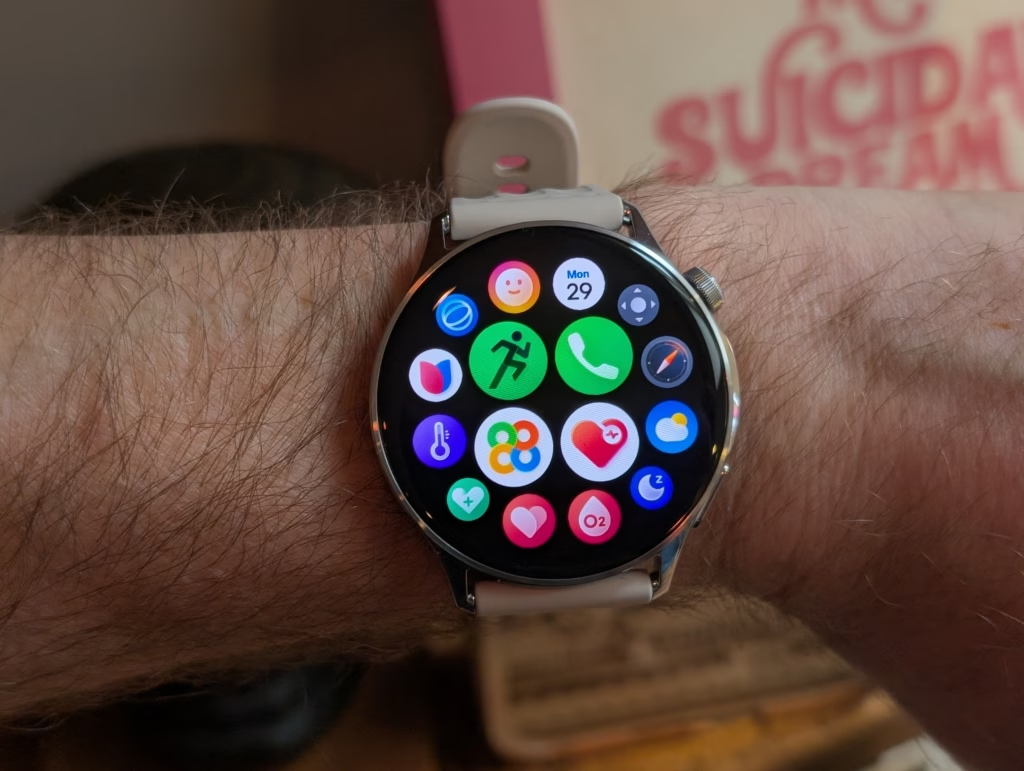
The 1.46-inch AMOLED display is one of the Watch Lite’s strongest features. With a resolution of 464 x 464 pixels at 317 PPI, text is sharp and colours are vivid. The 2.5D curved glass creates a subtle edge-to-edge appearance with bezels of just 2.8 mm, giving the watch a modern, premium look.
What really impressed me was the peak brightness of 3000 nits. This is actually higher than the OnePlus Watch 3, and it makes a genuine difference when using the watch outdoors. Even under direct sunlight, the display remains clearly readable without having to squint or shade the screen with your hand. During regular indoor use, the brightness automatically adjusts to around 600 nits, which is perfectly comfortable and helps conserve battery.
The OxygenOS Watch interface is intuitive and responsive. Swiping down from the watch face accesses the quick settings panel, where you can toggle do not disturb mode, pair headphones, adjust brightness, and access other common settings. Swiping up reveals your notifications, while swiping left shows health insights like step count, sleep score, and heart rate. Swiping right displays a customisable widget page with quick access to features like calendar entries and weather.

The rotating crown is a welcome inclusion at this price point, as many budget smartwatches omit this feature. Pushing the crown takes you to the app menu, where you can zoom in and out to see app icons more clearly. The haptic feedback when scrolling through menus adds a satisfying tactile element to the experience.
The touch screen includes Aqua Touch technology, which means it remains responsive even when wet. This is particularly useful during workouts when your hands might be sweaty, or if you get caught in the rain. I tested this by using the watch immediately after swimming, and it responded accurately without any issues.
The Always-On Display mode is available and works well, though it does reduce battery life from around 7 days to approximately 4 days. You can choose from a selection of AOD watch faces, and the implementation is power-efficient enough that the trade-off feels reasonable for those who prefer the always-visible time.
Health Monitoring and Insights
Health tracking is a core strength of the OnePlus Watch Lite, and it includes a comprehensive suite of sensors. You get heart rate monitoring, SpO2 (blood oxygen) tracking, sleep analysis, wrist temperature measurement, fall detection, cycle tracking, and breathing exercises. There is also a 60-second Wellness Overview feature that provides a quick snapshot of your overall health status.
The heart rate sensor performed accurately in my testing when compared against a dedicated chest strap monitor. During both rest and exercise, the readings were consistent and reliable. The continuous heart rate monitoring runs throughout the day without noticeably impacting battery life, and you can review historical data in the OHealth app.
Sleep tracking captures total sleep time, sleep stages, and provides a sleep score. However, I found the sleep analysis to be somewhat basic compared to dedicated sleep trackers. While it accurately recorded when I fell asleep and woke up, the breakdown of sleep stages felt less detailed than what you might get from a Whoop or Garmin device. The OHealth app also lacks the personalised sleep improvement recommendations that have become common on competing platforms.
The wrist temperature sensor is useful for tracking trends over time, particularly for women monitoring their menstrual cycle. The data syncs to the OHealth app where you can view historical temperature readings and correlate them with other health metrics.
One notable omission compared to the Watch 3 is the lack of ECG functionality. While the Watch Lite has sensors on the side of the case, these appear to be for the 60-second health check rather than a full ECG reading. If you specifically need ECG monitoring, the Watch 3 would be the better choice.
Fitness Tracking
The Watch Lite supports over 100 workout modes, covering everything from running and cycling to swimming, rowing, tennis, and skiing. Six activities can be automatically detected: running, walking, cycling, swimming, rowing, and elliptical training. This auto-detection worked reliably in my testing, typically recognising my activity within a minute or two of starting.
GPS tracking uses dual-band technology with support for GPS, Beidou, Galileo, GLONASS, and QZSS satellite systems. This comprehensive satellite support translates to quick lock-on times and accurate route tracking. During my running sessions, the GPS typically locked within 10-15 seconds, and the recorded routes matched my actual path closely when viewed on a map.
For runners specifically, the Watch Lite offers some advanced metrics including ground contact time, stride balance, and fat burning zone tracking. These features help you refine your running form and optimise your training. The watch can also estimate your lactate threshold, which is useful for structuring training around specific heart rate zones.
The 5ATM water resistance rating means the watch is suitable for swimming and can handle depths of up to 50 metres. I used it during several pool sessions without any issues. The Aqua Touch display technology means you can still navigate the interface with wet fingers, which is a practical consideration for swimmers.
One limitation worth noting is that the Watch Lite cannot pair with external sensors like heart rate chest straps or cycling power meters. If you require this level of integration for serious training, you would need to look at alternatives like the Amazfit T-Rex 3 or Garmin models.
Notifications and Other Features
The Watch Lite delivers smartphone notifications reliably, displaying alerts from messages, emails, social media, and other apps. However, the notification handling is more basic than what you would get with a Wear OS watch. You can view notification content and dismiss alerts, but you cannot reply to messages from the watch itself. For emails, you typically only see the subject line and sender rather than the full message content.
Bluetooth calling is supported, allowing you to answer and make calls directly from the watch when paired with your phone. The speaker and microphone quality are adequate for short conversations, though I found myself preferring to use my phone for anything longer than a brief exchange. The ability to see incoming caller ID and accept or reject calls without reaching for your phone is convenient nonetheless.
While the Watch Lite does include NFC, it sadly does not support contactless payments. The NFC functionality is limited to unencrypted key fobs and access cards, which is disappointing. If paying for your coffee with a tap of your wrist is a priority, you will need to look at the Watch 3 with Google Wallet support, or alternative devices from Samsung or Garmin.
Other features include music control for playback on your phone, a compass, barometer, torch, timer, stopwatch, alarm, and weather display. The weather app pulls data through your phone connection and displays current conditions along with forecasts. The compass and barometer are useful additions for outdoor activities and hiking.
The watch includes over 350 downloadable watch faces through the OHealth app, plus the ability to create custom faces using your own photos. This level of customisation is generous and should satisfy most users looking to personalise their watch appearance.
Battery Life
Battery life is where the OnePlus Watch Lite truly excels. OnePlus claims up to 10 days of battery life in optimal conditions, with 7 days being more typical during regular use. In my testing with continuous heart rate monitoring, sleep tracking, GPS workouts several times per week, and regular notification checking, I consistently achieved around 6-7 days between charges. This is excellent by smartwatch standards.
With the Always-On Display enabled, battery life drops to approximately 4 days, which is still respectable. Many competing smartwatches struggle to last more than 1-2 days with AOD active, so the Watch Lite remains competitive even with this feature enabled.
The charging speed is also impressive. A 10-minute charge provides approximately 24 hours of use, which is helpful when you forget to charge overnight and need a quick top-up in the morning. A full charge from empty takes around 90 minutes, which is reasonable.
The extended battery life is one of the key benefits of using a proprietary RTOS rather than Wear OS. The BES2800BP chipset is optimised for power efficiency, and without the overhead of running Android-based apps, the watch sips power rather than gulping it. For users who hate frequent charging, this alone might justify choosing the Watch Lite over more feature-rich alternatives.
Price and Alternative Options
The OnePlus Watch Lite has an RRP of £179, and at the time of writing, it was discounted to £159 with a free pair of OnePlus Nord Buds 3 Pro, subject to availability. This launch promotion makes it particularly good value if you can catch it.
The OnePlus Watch 3 is £319 RRP and available for £269 during promotional periods, with the smaller 43 mm model also available at £269. If you need Wear OS functionality, third-party apps, and Google Wallet payments, the Watch 3 remains the better choice despite the higher price.
Xiaomi offers some interesting alternatives in this price bracket. The Watch S4 41 mm is just £130, though it has a smaller, more feminine design that will not suit everyone. The larger 48 mm Xiaomi Watch S4 launched at £140 and is currently available for around £125, making it the budget option in this comparison.
Honor has the Watch 5, which features a square face similar to the Apple Watch and is available for approximately £110. If you prefer the rectangular smartwatch aesthetic, this is worth considering.
Huawei offers multiple watches in this category, with most being more advanced than the alternatives listed here. The Watch GT 6 is perhaps the closest competitor in terms of price and design, available for £179. It includes more advanced features such as virtual cycling power and offers a longer battery life of 12 days in typical use, which edges ahead of the OnePlus Watch Lite.
I have previously reviewed the Amazfit T-Rex 3, which I liked for its ability to pair with external sensors such as heart rate straps and power meters. While it is an excellent watch for serious athletes, the design is more rugged and divisive than the sleek OnePlus Watch Lite. The T-Rex 3 is currently available for around £199.
Garmin remains arguably the best option for dedicated fitness tracking, but with a significant price premium. The Garmin Vivoactive 5, which has a fairly basic appearance with less functionality than the Forerunner models, is available for £182. The most basic Forerunner model, the 55, has an RRP of £180. If fitness tracking accuracy is your absolute priority, Garmin’s ecosystem and training features are hard to beat, but you pay for it.
The CMF Watch 3 Pro from Nothing is another budget alternative worth mentioning, though the OnePlus Watch Lite’s superior water resistance and more comprehensive health tracking features justify its slightly higher price for most users.
It is worth noting that the OnePlus Watch Lite is not currently available in the United States or Australia, limiting its market to the UK and Europe. If you are reading this from those regions, you will need to consider the alternatives mentioned above or look at importing the Watch Lite through unofficial channels.
Overall
The OnePlus Watch Lite succeeds at what it sets out to do. It delivers a slim, lightweight smartwatch with excellent battery life, a bright display, and reliable health and fitness tracking at a competitive price point. The design punches above its weight, looking and feeling more premium than many watches costing considerably more.
The trade-offs are clear and worth understanding before purchase. The lack of Wear OS means no third-party app support, no Google Wallet for contactless payments, and more basic notification handling. If you rely on Spotify, Google Maps navigation on your wrist, or paying for things with a watch tap, the Watch Lite will frustrate you. These are not minor omissions for some users.
However, for users who primarily want a fitness tracker that looks like a proper smartwatch, the Watch Lite is an excellent choice. The battery life alone sets it apart from most Wear OS devices, and the 3000-nit display is genuinely best-in-class for outdoor visibility. The cross-platform iOS and Android support and dual-phone pairing are useful features that the more expensive Watch 3 cannot match.
At £179 (or £159 with the current promotion), the OnePlus Watch Lite occupies a sensible middle ground between basic fitness bands and full-featured smartwatches. It is considerably cheaper than the Watch 3 while retaining much of the design appeal and core functionality. For fitness-focused users who do not need the smart features of Wear OS, it represents genuinely good value.
If you need the full smartwatch experience with apps, payments, and deep Google integration, spend the extra for the OnePlus Watch 3. But if you want something slim, comfortable, and capable of lasting nearly a week between charges while accurately tracking your health and fitness, the OnePlus Watch Lite delivers exactly that. It is a well-executed product that fills a gap in the OnePlus lineup and competes effectively against established players like Xiaomi, Honor, and Huawei.
OnePlus Watch Lite Review
-
Overall - 85%
85%
Summary
The OnePlus Watch Lite is a well-judged mid-range smartwatch that prioritises comfort, battery life, and reliable health and fitness tracking over smart features. By dropping Wear OS, OnePlus has delivered a slimmer, lighter watch with excellent endurance and a class-leading 3000-nit display at a significantly lower price than the Watch 3. It will not suit users who rely on apps, contactless payments, or rich notification interactions, but for those who want a capable fitness-focused smartwatch that looks premium and lasts close to a week between charges, the Watch Lite offers strong value for money at £179.
Pros
-
Excellent battery life of around 6 to 7 days in typical use
-
Slim, lightweight design that is comfortable for all-day and sleep wear
-
Very bright 3000-nit AMOLED display with excellent outdoor visibility
-
Accurate GPS and comprehensive fitness and health tracking
-
Works with both Android and iOS, including dual-phone pairing
Cons
-
No Wear OS support or third-party apps
-
No contactless payments despite NFC hardware
-
Basic notification handling with no replies
-
No support for external fitness sensors